It is also effective in enhancing customer satisfaction, building trust, and reducing the level of food waste within homes and institutions.
The maintenance of food is a more burning problem in the modern, hectic world than ever before. Food boxes are required in the maintenance of food quality, safety, and flavor, whether at home, during delivery, catering, or food packaging. Food boxes are highly technical and are designed smartly, and hence, one of the best food preservation solutions.
What Are Food Boxes?
Food boxes are a type of container that is designed to store, transport, and deliver foodstuffs. They are designed to control temperature, moisture, air, and contamination, unlike other containers. Depending on the type of food and use, they are packaged in numerous forms such as insulated boxes, eco-friendly cardboard boxes, plastic containers, and biodegradable packaging, among others.
Understanding Food Freshness
Freshness of food is the capacity to preserve the original flavor, texture, smell, and nutrition of food. Food can easily spoil due to exposure to air, moisture, light, temperature change, and contaminants. The food box is designed in a manner in which it regulates these factors.
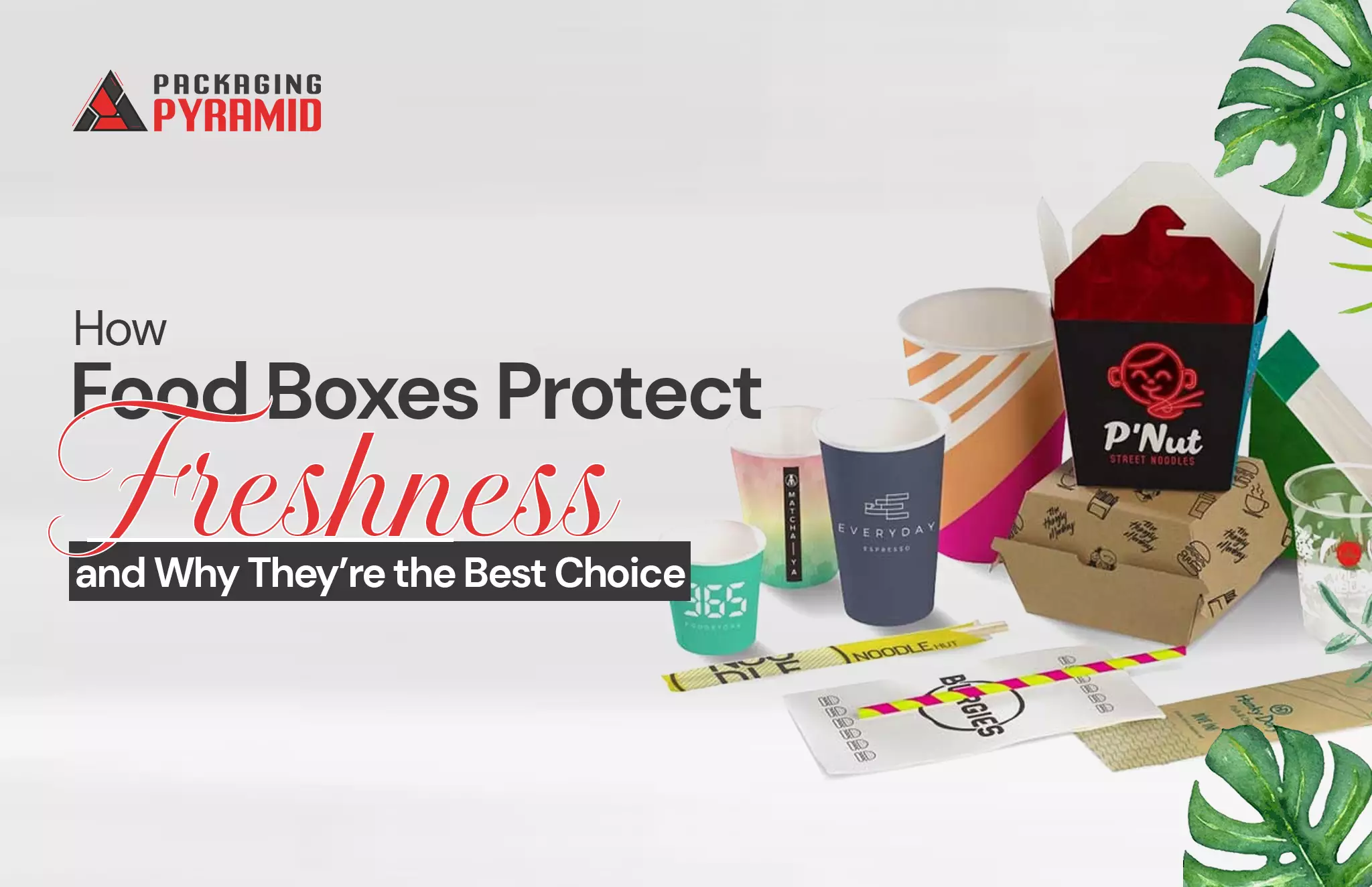
How Food Boxes Protect Freshness and Why They’re the Best Choice
How Food Boxes Protect Freshness
1. Airtight Sealing Prevents Contamination
Food boxes are of high quality to ensure that there is minimal contact with air. Air does not reach the food because airtight containers do not allow the oxidation process by ensuring that the food is not in contact with it, as well as preventing the growth of bacteria and molds. This is especially for cooked foods, baked goods, and perishable foods.
2. Moisture Control Maintains Texture
Too much water may result in the food being soft, and too little water may result in the food becoming hard. Food boxes are also useful to maintain the level of moisture that keeps the product of a food, such as bread, fruits, vegetables, and ready-to-eat meals, in the right texture.
3. Temperature Insulation Enhances Shelf Life
Several food boxes are made with insulated materials that assist in maintaining the temperatures inside the boxes. This will limit the effects of either heat or cold when storing and transporting, hence allowing the food to have a longer shelf life, especially when delivering.
4. Food-Grade Materials Ensure Safety
The material used in the preparation of food boxes is food-safe. This lowers the chances of chemical contamination and ensures preservation of the flavours, and may be appliedton both hot and cold foods.
5. Protection from Light and External Elements
Food may spoil as soon as it is exposed to light, and this may result in poor quality of food. Food boxes, which are opaque and coated removes the harmful light and the food is sheltered against dust, bugs, and other damage.
6. Structural Strength Prevents Damage
Food boxes are robust such that they are able to resist food devastation, spillage, and leakage. This assists in preserving the food in its original form and look, particularly when it involves a take-away and delivery system.
Why Food Boxes Are the Best Choice
1. Convenience and Portability
Food boxes are not bulky and stackable. They are conveniently small and can fit well in food delivery services, food preparation, and consumption on the go.
2. Versatile for All Food Types
Food boxes have different models depending on the requirements of different foods, such as dry snacks, hot foods, and frozen foods. Such versatility allows using them in households, restaurants, and commercial kitchens.
3. Eco-Friendly Options Available
A lot of the packaging of modern food products is either biodegradable, recyclable, or compostable. These eco-friendly alternatives limit the effects on the environment and yet offer great protection of food.
4. Cost-Effective Storage Solution
Food boxes will prevent food waste because they prolong the freshness of food. Fewer spoils imply cost savings to businesses and households, and thus they are viable long-term investments.
5. Hygienic and Tamper-Resistant
Food boxes provide a safe and healthy packaging option. Tamper-proof packaging helps in building consumer trust, especially in the context of food delivery and retailing.
6. Enhances Presentation and Branding
Good food boxes are used to present the food in a better way and give it a professional look. To companies, branded food boxes can be used as an advertising instrument as well as a means of preserving the freshness of the product.
Why Is Food Freshness Important?
Freshness of food is important in that food taste, nutrition, and safety are dependent on it. Fresh food is the same in terms of taste, texture, and nutrition, and eliminates the risks of food spoilage and contamination.
10 Reasons Why Proper Packaging Is Important for Food Safety
1. Prevents Contamination and Spoilage
The right packaging works as some sort of shield against bacteria, dust, moisture, and air exposure, which highly reduces the risk of contamination and spoilage of the perishable food products before expiration.
2. Extends Shelf Life
Quality packaging controls the quantity of oxygen, light, and humidity, slows down the development of the microorganisms and the oxidation process that prolongs the shelf life and preservation of the foods.
3. Ensures Compliance with Safety Regulations
Food packaging helps businesses to meet health and safety requirements by providing the label of food packaging, ingredients, expiry date, and storage information on the food packaging as required by the authorities.
4. Protects Food from Physical Damage
The food is protected by durable packaging that will withstand crushing, breakage, and leakage during handling, storage, and transportation of the food to the consumer without spoilage.
5. Enhances Product Visibility and Appeal
Attractive and nice packaging increases the visibility of the product, reveals the brand, and spreads quality, which influences the buying decision, but still maintains food safety.
6. Reduces Manufacturing Waste
Good packaging avoids spillage, contamination, and spoilage of the product during the manufacturing process, facilitating the manufacturer to produce less waste, more efficiently, and ensuring food safety.
7. Supports Sustainability Efforts
The packaging materials are environmentally friendly, hence limiting the effects on the environment by using recyclable, biodegradable, or compostable materials and processes that do not affect the preservation of food.
8. Aids in Transportation and Storage
The packaged food is easily stacked, transported, and stored at the required temperature, hence reducing the chances of contamination and also ensuring that the food is of high quality.
9. Safeguards Against Tampering and Theft
Tamper-evident packaging and locking closures prevent outsiders from accessing the food, hence protecting the food from contamination and theft, and also ensuring the consumer's safety of the food.
10. Promotes Consumer Trust and Safety
Proper packaging also assures people of the hygiene, safety, and quality of the product they are purchasing, and this means confidence and thus repeat business without jeopardizing the health levels of the people.
How to Choose the Right Food Box
A food box may be selected: one should take into account:
Type of food
Select a food box depending on the nature of the food, be it liquid, solid, dry, or greasy, and the shape, strength, and lining of the box to remove all impairments affecting the freshness of the food.
Hot or Cold Storage
Use food boxes, which can be used to store either hot or cold food, made of heat-resistant or insulated materials, which do not affect the quality of the food.
Storage Time
Take into account the duration of storing the food. When the food is stored for a long time, it needs airtight food boxes well endowed with moisture to ensure that the food is not spoiled easily, and it still retains its freshness.
Delivery Distance
The food boxes can and must be strong and leak-proof, and keep the food at a constant temperature in case of long or short distance transport.
Eco-Friendly Needs
To ensure the negative impact on the environment is minimal, it is best to use recyclable or biodegradable food containers without affecting the food safety, durability, and freshness that is consumed.
Conclusion
Food boxes play a critical role in maintaining the freshness, safety, and quality of food. They enhance shelf life, Order Now lessen food waste, and enhance presentation by regulating air, moisture, temperature, and contamination. Food boxes are the best options of packaging used whether at home or in businesses.
FAQs
Are food boxes safe for hot and cold foods?
There are food boxes that are designed with hot food and cold food. Others are heat-resistant, others are insulated or even freeze-resistant, depending on the material.
Are eco-friendly food boxes as effective as plastic ones?
Surely, the high-quality eco-friendly food boxes are able to deliver better insulation and protection, and, simultaneously, be friendly to the environment.
Can food boxes help reduce food waste?
Absolutely. Food boxes improve food shelf life and reduce spoilage and wastage of food by preserving food freshness, texture, and food safety.