Selecting the appropriate cardboard box is more than simply selecting the first suitable size to fit your product. Consider the following
Get to know more about cardboard boxes, their varieties, advantages, and green purposes in shipping, storing, and packing that improve branding.
What are Cardboard Boxes?
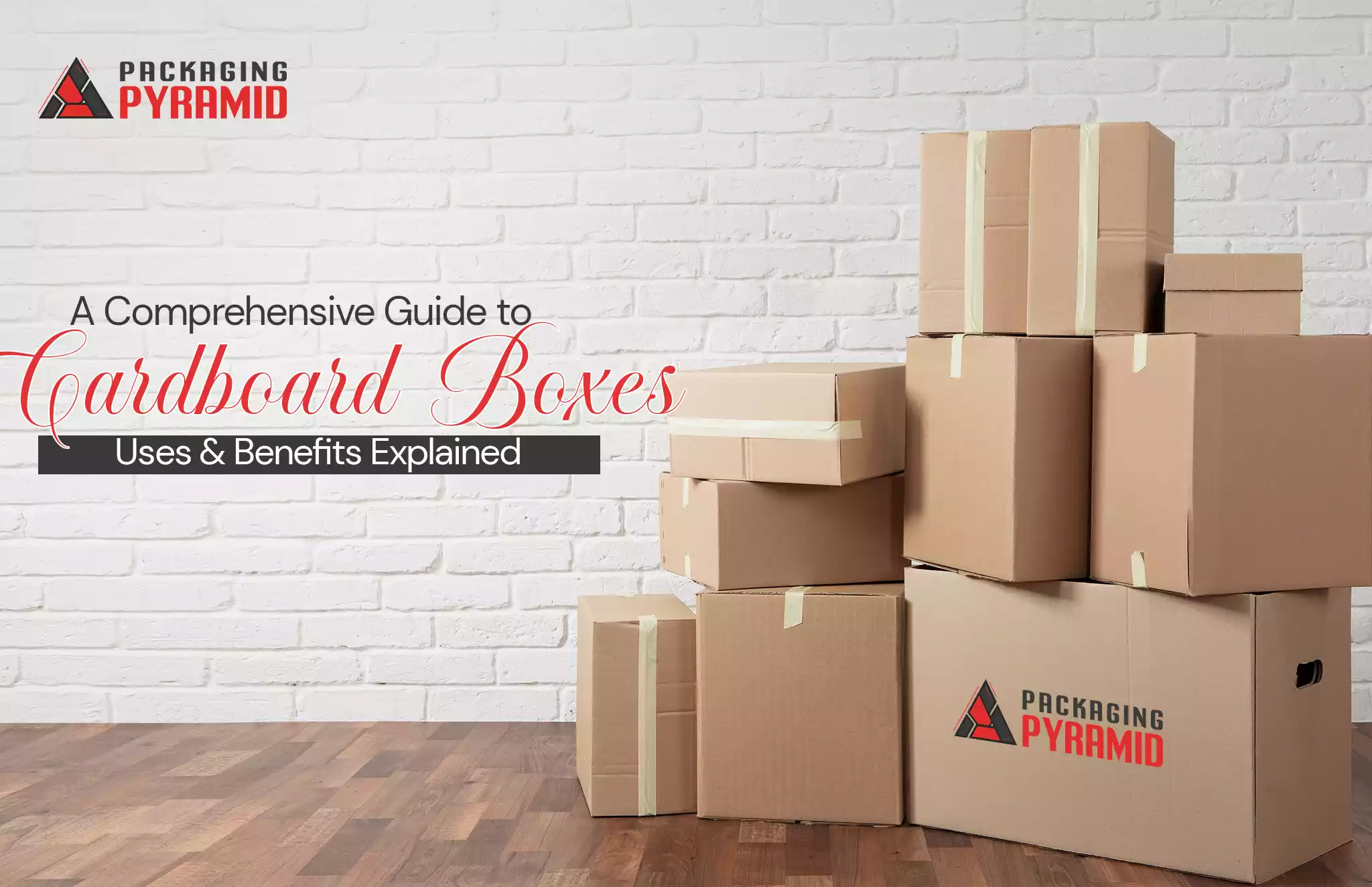
Cardboard boxes are those packages made of paper-based material, most commonly corrugated or solid fiberboard, which are packaged, shipped, and stored. The solution offers a light and durable protection of products during transportation and allows businesses and individuals to develop the elements of branding and design in the desired sizes.
Common Types of Cardboard Boxes
The cardboard boxes are of varying designs, which suit the package needs, such as display packages, shipping, and storage.
1. Windowed Cardboard Box
These boxes have an open window which allows customers to see the product inside the box and yet keep it covered and attractive.
2. Lock-Bottom Cardboard Box
These boxes are made to have a self-locking base, allowing them to act as a strong support to heavier objects, as well as avoiding the use of extra tape.
3. Tuck-End Cardboard Box
There is an option of the tuck-end boxes being folded into the box so as to create easy assembly, a secure lock, and a sophisticated appearance to the retail package.
4. Corrugated Cardboard Box
These boxes are made of several layers of corrugated paper and are very strong, shock-resistant, and can be used in transportation and high-load storage.
Applications of Cardboard Boxes
Cardboard boxes are flexible packages applicable in any industry, and it provides protection, presentation, as well as convenience to a wide variety of products.
- Food Packaging: Takeout, bakery, snacks, and frozen food are typically packaged in cardboard boxes that keep food, make it safe and able to be transported.
- Cosmetic Packaging: The packaging of the products done in cardboard boxes creates brand popularity, safeguarding delicate products and providing a distinct experience of opening the products to the customer.
- Pharmaceutical Packaging: The packaging of medicines, supplements, and medical equipment is done in a secure way through the use of cardboard boxes, which guarantee hygiene, durability, and regulatory precautions.
Why Choose Cardboard Boxes for Your Packaging Needs?
The boxes are fabricated using a cardboard material that is flexible and has strength at a low cost, which is why it can be used in the packaging process. They are not heavy but strong enough to take care of the cargo on transit, and your products arrive at the customer in the best condition possible.
Moreover, cardboard packages can be recycled, biodegraded, and, more crucially, in most instances, cardboard is made from more sustainable materials, which goes to prove the growing interest in green packaging. That is why they are so popular:
- Durability and Safety: Cardboard boxes are tough enough to hold sensitive goods when storing and transporting. They are resistant to laying, compression and hard handling.
- Cost-Effective: Cardboard is cheap compared to plastic or metal boxes, and therefore, the company can invest the cash in other processes.
- Eco-Friendly: Most of the cardboard boxes are recyclable and biodegradable, which means that they are also involved in the sustainability program and appeal to eco-conscious consumers.
- Versatile Sizes and Shapes: The cardboard boxes can take the form of small boxes that fit in the post-mail, to huge storage boxes that can accommodate any size of goods.
How to Select the Perfect Cardboard Box for Your Products
- Box Material: The single-wall, double-wall, and triple-wall boxes all provide different degrees of strength to different products.
- Product Weight and Fragility: The heavier and more fragile products should have firmer boxes with cushioning inserts.
- Dimensions: This is to ensure that the box is not too large, as it can hold the product firmly against movement and break easily.
- Shipping and Handling Needs: This is to find out how the box will be shipped (long-distance or local shipment); this can influence the type of cardboard to be used.
The packaging pyramid is one of the practical packaging design tools, the main factor to consider in them being the protection of the products, their functionality, and the experience of a customer, which allows the businesses to select the packaging that ensures the safety, convenience of the packaging, and appearance
Top Benefits of Using Cardboard Boxes for Shipping and Storage
Organized storage is also important since cardboard boxes are required to be shipped. Here are the top benefits:
- Light and Strong: Cardboard boxes are light and easy to handle, which decreases shipping bills, but are strong enough to prevent damage to fragile or heavy products on their way.
- Stackable Storage: Businesspeople achieve better inventory storage through uniform cardboard boxes, which enable them to stack boxes easily in storage areas of warehouses.
- Versatility: Cardboard boxes provide a versatile solution for shipping and storing products because they can accommodate all types of items, including electronics, clothes, and delicate items.
- Customizable Branding: Firms design their own boxes by printing their logo, brand colors, and QR codes, which contribute to the creation of brand awareness as customers use the boxes during the shipping process
Tips for Customizing Cardboard Boxes to Boost Your Brand
Your packaging creates the first brand experience for customers. The following are the ways to personalize cardboard boxes to ensure they make a lasting impression:
Print Your Logo and Brand Colors
Represent your brand name by stamping boxes with logos and colors that can make the complete experience unified and memorable to all the customers.
Include Messaging and Product Info
Inscribe instructions, care information, or promotional content in or out of boxes to inform customers and enhance brand interaction.
Use Window Cutouts or Unique Shapes
The packaging must have visuals which should be artistically inclined to form a window display that will attract customers at a distance.
Incorporate Eco-Friendly Labels
The main emphasis of the company should be on sustainable practices through recyclable labels, which will appeal to the environmentally friendly consumers as well as brand value creation.
Frequently Asked Questions (FAQs)
1. What are cardboard boxes commonly used for?
Cardboard boxes are widely used for packaging, shipping, and storage across industries such as food, cosmetics, pharmaceuticals, retail, and e-commerce.
2. What materials are cardboard boxes made from?
They are typically made from paper-based materials, including corrugated cardboard or solid fiberboard, designed for strength and lightweight performance.
3. What is the difference between corrugated and solid cardboard boxes?
Corrugated boxes contain fluted layers for enhanced strength and shock resistance, while solid cardboard boxes are thinner and mainly used for retail packaging.
4. Are cardboard boxes suitable for heavy products?
Yes, especially lock-bottom and double- or triple-wall corrugated boxes, which are designed to support heavier and fragile items.
5. Are cardboard boxes environmentally friendly?
Most cardboard boxes are recyclable, biodegradable, and often made from renewable or recycled materials, making them a sustainable packaging choice.
6. Can cardboard boxes be customized for branding?
Yes, they can be customized with logos, brand colors, product information, QR codes, window cutouts, and unique structural designs.
7. How do I choose the right cardboard box for my product?
Selection depends on product weight, fragility, box material strength, dimensions, and shipping distance or handling requirements.
8. Why are cardboard boxes cost-effective?
Cardboard is less expensive than plastic or metal alternatives, lightweight for reduced shipping costs, and efficient for bulk production.
9. Are cardboard boxes safe for food and pharmaceutical packaging?
Yes, when manufactured to industry standards, cardboard boxes provide hygienic, secure, and regulation-compliant packaging solutions.
10. What role does packaging design play in cardboard boxes?
Effective design balances protection, functionality, and visual appeal, improving customer experience and reinforcing brand identity.
Conclusion
The role of the cardboard boxes is beyond mere use as containers, as they guard the products during storage and transportation, in addition to branding. Proper choice of material, size, and design, along with customization, enables businesses to enhance their customer experience and sustainability programs.
The packaging pyramid also helps to set the priority between the functional features and the visual design features, which enables your cardboard boxes not only to provide maximum security but also to be attractive.