Packaging has always been a major contributor in the success or failure of a product. From attracting the target audience to impressing them and leaving them with no choice but to check out is how packaging impacts.
Packaging has always been a major contributor in the success or failure of a product. From attracting the target audience to impressing them and leaving them with no choice but to check out is how packaging impacts.
In the competitive world where e-commerce stores and brands are emerging at a rapid pace, packaging has to be impactful.
Packaging can be categorized into two main categories:
- Custom Packaging
- Stock Packaging
In this post, we will discuss everything you need to know about custom and stock packaging, and the differences between the two. Let’s get started.
What is Stock Packaging?
Stock packaging is a pre-made generic packaging with standard size, color, and material. Due to its similar nature. Think of it as the standard sizes and styles of boxes, bags, bottles, or containers that are already manufactured and available for purchase.
Instead of designing custom packaging from scratch, companies can choose from a wide range of pre‑designed options that are cost‑effective, quick to source, and versatile for different products.
What makes stock packaging so popular is its convenience and affordability. Whether you’re a small business just starting out or a larger brand looking for a practical solution, stock packaging helps you get your products into customers’ hands without the long wait times or higher costs of custom packaging. Plus, many suppliers now offer Eco‑Friendly Stock Packaging, so you can keep things sustainable while still looking professional.
In short, stock packaging is the go‑to choice for businesses that want reliable, budget‑friendly, and attractive packaging solutions without the hassle of custom design.
Pros and Cons of Stock Packaging
When it comes to packaging your products, stock packaging is often the go‑to choice for many businesses. It’s convenient, affordable, and widely available—but like anything, it has its upsides and downsides. Let’s walk through them in a simple, conversational way.
Pros of Stock Packaging
- Cost‑effective: Stock packaging is usually much cheaper than custom options, making it perfect for startups or small businesses.
- Quick availability: Since it’s pre‑made, you can get it fast without waiting weeks for production.
- Wide variety: From boxes and bags to bottles and jars, there’s a huge range of styles and sizes to choose from.
- Eco‑friendly options: Many suppliers now offer sustainable stock packaging, so you can stay green without breaking the bank.
- Professional look: Even though it’s not custom, stock packaging can still look sleek and stylish.
Cons of Stock Packaging
- Limited customization: You can’t fully tailor the design to match your brand identity.
- Less unique: Since many businesses use the same styles, your product may not stand out.
- Size restrictions: Limited to the standard sizes available, which may not fit your product perfectly.
- Branding challenges: Adding logos, colors, or special finishes often requires extra steps and costs.
- Perceived value: Custom packaging can feel more premium, while stock packaging may come across as basic.
What is Custom Packaging?
Custom packaging is all abou t creating packaging that’s uniquely designed for your brand and product. Unlike stock packaging, which comes in standard shapes and sizes, custom packaging is tailored to reflect your brand’s personality, values, and style. It’s the box, bag, or container that not only protects your product but also tells your story the moment a customer sees it.
The best thing about custom packaging lies in its flexibility and creativity. You can choose the exact size, shape, colors, materials, and finishes that make your product stand out. Custom packaging gives you the freedom to make several choices that suit your target audience.
Beyond looks, it’s also a powerful marketing tool. Eye‑catching packaging can boost brand recognition, create memorable unboxing experiences, and even encourage customers to share your product on social media.
Pros and Cons of Custom Packaging
Custom packaging is like giving your product its own unique design to fit perfectly and show off your brand’s identity. It’s a powerful way to stand out, but it also comes with some trade‑offs. Let’s explore both sides in a simple, conversational way.
Pros of Custom Packaging
- Unique branding: Custom packaging lets you showcase your logo, colors, and design, making your product instantly recognizable.
- Memorable unboxing experience: A creative design can turn opening a package into a moment customers want to share.
- Perfect fit: You can design packaging to match the exact size and shape of your product, reducing waste and improving protection.
- Premium appeal: Custom packaging often feels more luxurious, helping elevate your product’s perceived value.
- Marketing tool: Beyond protection, packaging becomes a silent salesperson that communicates your brand story.
Cons of Custom Packaging
- Higher cost: Custom designs are more expensive than stock packaging, especially for small runs.
- Longer lead times: Creating and producing custom packaging takes more time compared to stock packaging.
- Complex process: From design to materials, there are more decisions to make, which can feel overwhelming.
- Minimum order requirements: Many suppliers require bulk orders, which may not suit smaller businesses.
- Risk of redesign: If your branding changes, you may need to update packaging, adding extra costs.
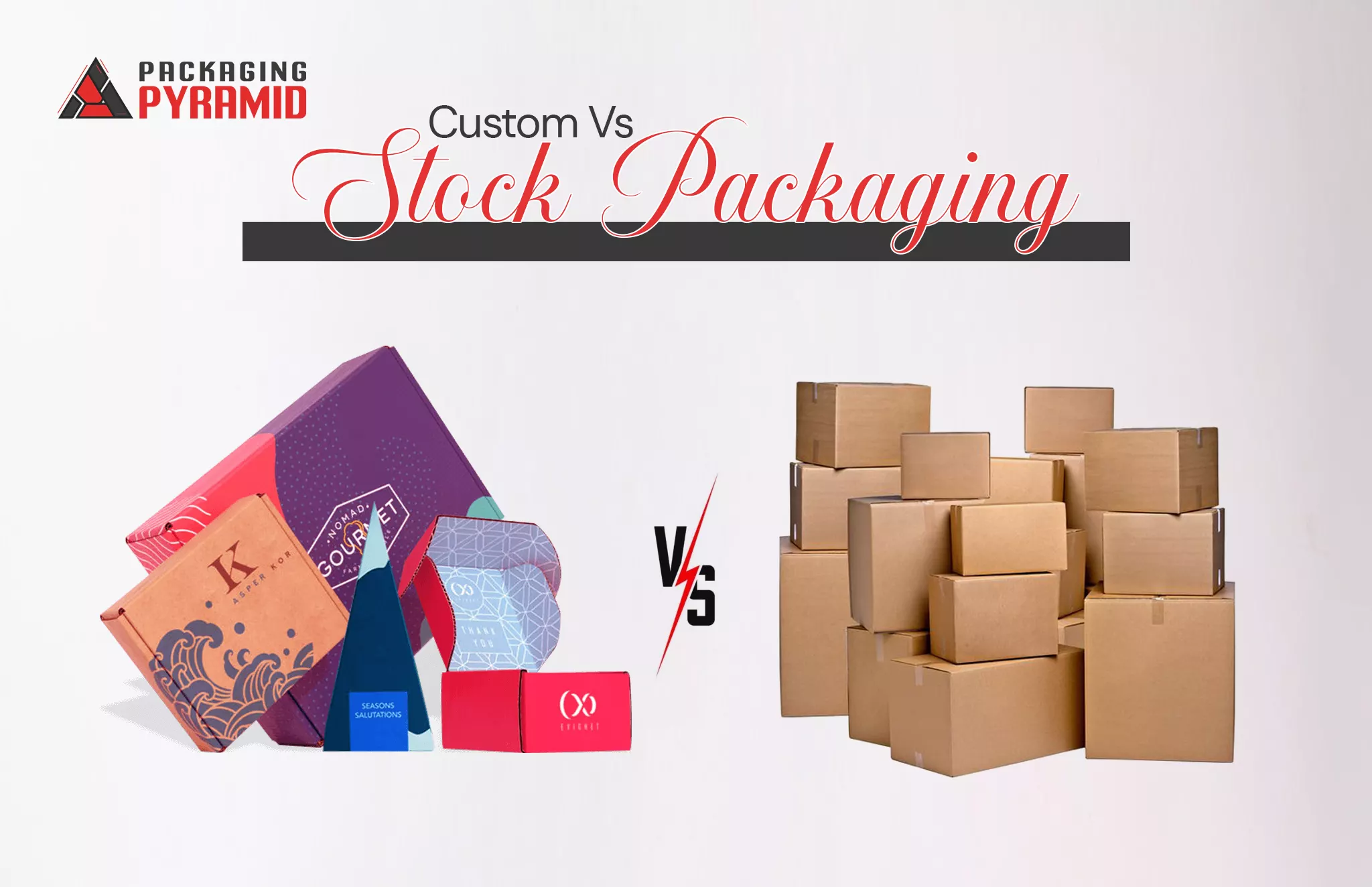
Custom Vs Stock Packaging: What’s the Difference?
| Feature | Stock Packaging | Custom Packaging |
| Cost | More affordable, ideal for startups and small businesses | Higher investment, especially for premium designs |
| Availability | Ready‑made and quickly accessible | Requires design and production time, longer lead times |
| Variety | Wide range of standard sizes and styles | Unlimited options tailored to your brand vision |
| Branding | Limited customization, may look generic | Fully customizable with logos, colors, and finishes |
| Uniqueness | Commonly used, less distinctive | Unique and memorable, helps products stand out |
| Fit | Standard sizes may not perfectly fit products | Designed to match product dimensions exactly |
| Customer Experience | Professional but basic | Creates premium unboxing experiences and boosts perceived value |
| Eco‑friendly Options | Available but limited | Can be designed with sustainable materials and practices |
Stock Vs Custom Packaging: Which One is Better?
It really depends on your goals. Stock packaging is cheaper and faster, great if you just want to get products out the door. Custom packaging, on the other hand, costs more but elevates your brand, making your product feel premium, memorable, and instantly recognizable. If building a strong brand identity is your priority, custom packaging is the better long-term play. If budget and speed matter most, stock packaging works fine.
Summing Up
Ready to elevate your brand? Don’t let your products blend in with your competitors. Make them unforgettable with Packaging Pyramid’s custom packaging solutions.
Whether you’re a startup or an established business, our team is here to help you design packaging that resonates with your target audience and brand. Get started today. Contact Packaging Pyramid and let’s make packaging that sells your story.
Stock vs Custom Packaging: Features, Advantages & Limitations
Packaging is very strong in the protection of products, branding, marketing, and customer experience. So, whether it is an eCommerce store, a retail shop, a food business, or a manufacturing company, the need to select between custom packaging and stock packaging can have a direct effect on the brand image and profits.
What is Custom Packaging?
Custom packaging refers to packaging engineered to meet the very special needs of a certain product or brand. These could vary, and they could be boxes, bags, or any other container that is specifically made in terms of size, shape, material, design, and branding features, and many other important needs that some companies may require.
Key Features of Custom Packaging:
- Special sizes and shapes to fit products to the tee.
- Individualized branding containing logos, colors, and graphics.
- Green and environmentally friendly materials were necessary.
- Compartments or inserts or leak-proof seals: functional designs.
3 Fundamental Types of Custom Packaging
Primary Packaging
Primary packaging is that which contains the product literally and protects it from damage, contamination, and environmental factors in a satisfactory quality and safe manner.
Secondary Packaging
Secondary packaging bundles the brand, adds extra security, and facilitates packaging in bulk to offer easier handling by retail display or transportation.
Tertiary Packaging
Bulk handling, storage, and shipping are done with tertiary packaging, which ensures the transportation and storage of several secondary packages in a manner that ensures safety and efficiency in logistics.
Advantages of Custom Packaging
1. Unique Design
Custom packaging enables businesses to develop visually distinctive designs that depict their brand name and increase customer interest as well.
2. Brand Differentiation
The individual packaging will make the product stand out from the rest, thereby helping to create awareness. It will give a lasting impression to customers.
3. Reduced Waste
Customized packaging refers to the package of the product, which is of the exact fit, hence eliminating waste materials. It also reduces shipping costs and promotes environmental conservation.
Limitations of Custom Packaging
Higher Initial Cost
Custom packaging involves designing, procuring material and manufacturing, and therefore the initial cost of custom packaging is considerably higher than the stock packaging alternatives.
Longer Lead Times
Individual packaging made to fit the product is time-consuming and commonly slows down the product launch or restocking, in comparison to the stock packaging, where the packaging has already been prepared.
MOQ Requirements
Minimum order quantity (MOQ) is normally associated with custom packaging, and this may be problematic for small companies or those that have low product volume.
What is Stock Packaging?
Standard or pre-made packaging is also referred to as stock packaging, which consists of pre-made boxes and containers sold in bulk. The available options provide lower costs and faster delivery, but their design possibilities are limited. Stock packaging can be used by companies that value both cost-efficiency and fast turnaround times more than customized branding.
Key Features of Stock Packaging:
- In conventional sizes and shapes.
- Little or no branding choices.
- Typically less expensive than custom solutions.
- Fast and easily available in bulk.
Benefits of Stock Packaging
1. Affordability
The packaging of stocks is produced in large volumes, and therefore it is economical to the business, saves initial costs, and helps in tight budgets without the need to invest in designs.
2. Quick Availability
Ready stock packaging is easily obtained through suppliers, and a company can pack the products at once without necessarily having to wait until they are produced on a custom order basis.
3. Simplicity
Stock packaging needs no designing and it is therefore simple to use, hassle-free and convenient in cases of simple packaging requirements.
Limitations of Stock Packaging
No Branding
Stock packaging has little to no branding opportunities, and as such, businesses will not be able to develop a memorable brand image or brand personalization.
Limited Sizes
The packaging of stocks is available in standard sizes, which do not necessarily fit the products hence wastage or ineffective protection during delivery.
Perceived as Generic
Packaging products in stock can create an impression of generic or low-quality products that are not engaging to the customer and do not stand out in the market.
Custom Packaging VS Stock Packaging: Major Differences
Custom packaging is completely custom to the size and design of a brand as well as its marketing requirements, which provides a strong branding and improved product fit.
Stock packaging is ready-made, affordable, and ready to purchase and use, but is not customized. The prime differences are in cost, branding flexibility, lead time, and overall customer experience influence.
When to Choose Custom Packaging
Personalized packaging is best suited to:
- High-quality goods in which branding and design are important.
- Boxes or gift packages with a competitive design.
- Those business firms that seek to stand out amongst their competitors.
- Goods that need special security when being shipped.
When to Choose Stock Packaging
Stock packaging is appropriate in:
- New businesses and small enterprises with limited funds.
- Mass-marketed products of a cost-saving nature.
- Unluxury products that do not need any brand storytelling through packaging.
- Rapid turnaround needs.
Stock vs. Custom Packaging: Which Should You Choose?
The decision to go with stock or custom packaging is based on the objective of your business, budget, and product requirements. The packaging of stock is best used by businesses that are interested in cheap, easily accessible solutions, particularly generic products or temporary promotions.
Custom packaging provides optimal solutions to brands that want to establish distinct identities while improving customer experiences and maintaining product security.
The investment needs, time requirements, and minimum order requirements of this solution create higher costs, but it delivers superior branding benefits, premium product presentation, and enduring customer loyalty.
Sustainability Considerations
Packaging can be custom or standard, and it may be environmentally friendly depending on the materials.
- For using recyclable, biodegradable, and compostable materials, customized packs can be used.
- Likewise, stock packaging may offer sustainable products, though the choice may be restricted.
Brands committed to sustainability may have a preference for custom packaging as it offers a green appeal.
Hybrid Approach: Best of Both Worlds
Some organizations take a hybrid approach, where a combination of stock and custom components is used. An example is:
- Using stock boxes with customized printed labels or sleeves.
- Including branded inserts, stickers, or ribbon inside regular packaging.
- Customizing individual sizes or types of packaging, but keeping others more generic
This approach balances cost efficiency and brands. It also helps businesses slowly change into custom packaging as the brand develops.