
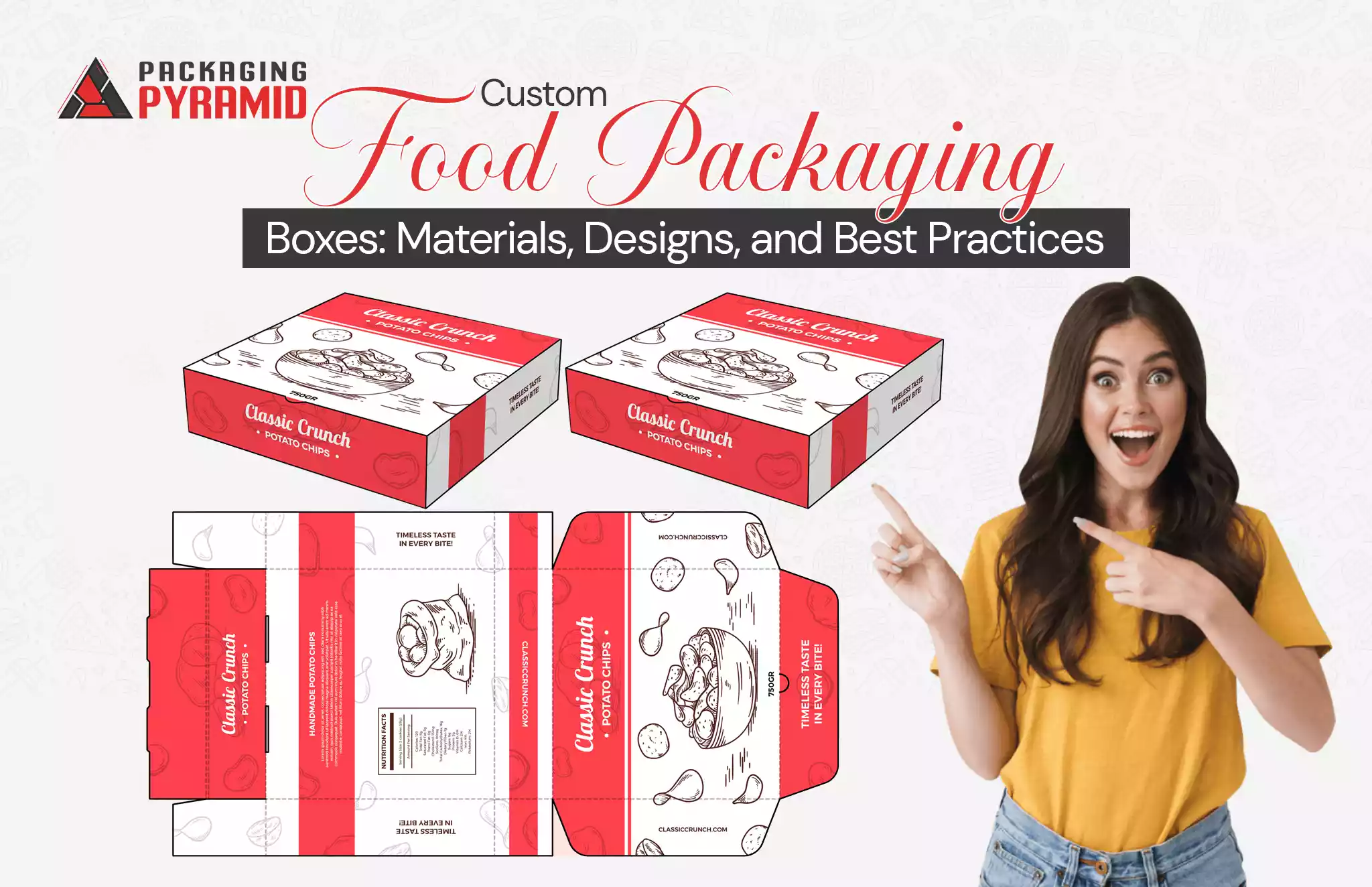
Learn about the use of custom food packaging boxes, materials, and styles to ensure safety, sustainability, branding, and customer appeal.
Custom food packaging boxes are unique packaging solutions that are customized to the requirements of a food brand in terms of size, material, printing, and functionality. Custom packaging is important to product presentation and safety, whether it is in restaurants, bakeries, the delivery of meals, or the retail food products.
Types of Food Packaging Boxes You Must Know
Pizza Boxes
The pizza boxes are made of corrugated cardboard. Ventilation structures are incorporated in the cardboard, which prevents moisture from building up on the inner surfaces of the pizza box. This design retains the pizza delivery as hot, fresh, and safe to transport.
Food Tray Packaging
Ready-made meals are kept in food tray packages. Trays are often produced using cardboard or biodegradable substances, are convenient, contain portion control, and are easy to handle by the customer.
Cereal Boxes
The cereal box is made of a paperboard box, lightweight, and suitable for holding a dry food supply because it keeps the product dry, displays nutritional information, and provides good branding opportunities.
Noodle Boxes
Noodle boxes are a type of folding paper container that is usually used to take out food. The designs are leak-proof and keep food warm, eliminate spills, and can be eaten directly in the box.
Chocolate Boxes
Chocolate boxes are high-end packaging products constructed out of rigid or paperboard. They are used to preserve the fragile chocolates, improve presentation, and enhance the value of a product.
Fast Food Boxes
The fast food boxes are strong, grease-resistant boxes that store burgers, fries, and snacks. They control food temperature, eliminate leakages, and provide improved visibility.
Biodegradable Food Containers
Biodegradable Food Packaging: Biodegradable food packaging uses “compostables” as a form of packaging for food items. They also make less environmental impact, cater to the demands of the environmentally conscious, and are able to meet sustainability levels.
Candy Boxes with Windows
The candy boxes have windows where the products are displayed. They will appeal to the eyes of the customer, besides ensuring that the sweets are not contaminated and are not damaged by the outside environment.
What are the best and safest custom food boxes?
Corrugated Boxes
Corrugated boxes are robust, strong, and perfect for the preservation of food when storing and transporting it. Their stratified structure has cushioning, protection, and superior protection against outside damage.
Folding Cartons
Folding cartons are lightweight food-grade paperboard boxes that are ideal when dealing with dry or food with a low weight. They are easy to customize, have clear printing, and a safe closure.
Kraft Grease-Proofed Boxes
Kraft grease-proofed boxes are environmentally friendly and are made to withstand oil and moisture. They can do well when served with burgers and fries along with other baked foods; these should be served to prevent spillage.
Stand-Up Pouches / Mylar Bags
Stand-up pouches and Mylar bags come in very handy for snacks and dry food, as well as resealable containers, because they have a tight closure, actively work to keep moisture away, and provide a longer shelf life.
Compostable Containers
Plant-based materials are also used in the production of compostable containers, which biodegrade in nature. Such containers are environmentally friendly and less harmful to nature, providing safe food and thus being the best in sustainable food businesses.
7 Top Tips To Design Fascinating Food Packaging Boxes By Industry Professionals
Unique Brand Identity
Design packaging that is similar to your brand personality, logo, typography, and tone. Regular branding creates awareness, creates credibility, and makes users recognize your products immediately by falling onto shelves.
Colors Influence Consumer
Select colors in a strategic manner as they influence feelings and purchasing habits. The warm colors trigger the desire to eat, and the natural colors give the impression of freshness, health, and environmental friendliness to the customers.
Material Used
Choose food-grade, durable, and environmentally friendly Substances that fit your product type. Good material guarantees freshness, safety, sustainability, and improves customer experience at large.
Provide Protection
Design packaging to prevent moisture, contamination, changes in temperature,,e and physical damage to food. Good structure ensures the quality of products is preserved throughout storage, handling, and transportation.
Use a variety of shapes.
Play with peculiar forms and structures to be different. Box styles Creative box styles can help in getting attention, enhancing functionality, and establishing a memorable unboxing experience.
Add Images
Add good pictures or drawingstthatdepict the food. Attractive images will activate the urge to eat, convey the product quality, and make the purchase.
Add Accurate Information
Nutritional facts, allergens, date of production, and expiration date. Consumer trust and adherence to rules are all about information.
Where To Buy Wholesale Food Packaging Boxes?
Wholesale Food Packaging Boxes are in the best place, sold in the Packaging Pyramid. It is a well-esteemed wholesaler retailer, and personalization, food-grade, and eco-friendly options are available at affordable costs. Businesses can select size, material, and design options that fit their needs for branding and budget.
Call To Action: Visit Packaging Pyramid
What Makes a Food Box Safe?
Food boxes do not equal food boxes. The most secure packaging options are pursuant to the following principles:
1. Constructed of Food-Grade Materials
The safe food boxes should be crafted using proven food-grade material that does not emit dangerous chemicals. These materials do not contaminate and meet the health rules.
2. Strong Barrier Protection
Good packaging will be very protective from moisture, oxygen, grease, light, and bacteria. It will correctly utilize the appropriate layers to provide for freshness and long shelf life.
3. Sturdy Structure
The safe food box must have a strong and sound design. It should be able to endure the process of stacking, handling, and transportation without falling and breaking the product.
4. Manufactured with Safety Standards
Good quality packaging is done in firms with a high level of hygiene and quality control. The production processes are certified to meet the food safety measures and industry standards.
5. Eco-Friendly When Possible
Recyclable, biodegradable, or compostable material should be used in every possible scenario. Sustainable packaging does not harm the environment and does not affect the safety of food or the preservation of the product.
Best Practices for Designing Custom Food Packaging Boxes
The customization of food packaging boxes is a process that has to be designed concerning safety, durability, and compliance. Good packaging also improves branding as well as protects food against contamination and damage. The following are some of the major guidelines of safe and reliable food packaging.
How Are Custom Food Boxes Designed?
Making custom food boxes is a deliberate action that brings in elements of safety, branding, functionality, and sustainability. All steps are meant to secure the packaging to the requirements of food protection, attracting customers, and identifying the brand.
1. Choose Green Materials
The first step is to choose food-grade materials that are green, like recyclable cardboard, kraft paper, and so on. Minimal effects on the environment, as well as consumer safety and product longevity, are also best achieved by using environmentally friendly materials.
2. Pick the Right Box Shape and Style
Choose a box design that suits the type and the use of food. It should be taken into account in order to provide protection and comfort to customers, taking into account size, weight, ventilation, and the convenience of handling.
3. Create Simple and Clear Artwork
Create professional artwork that does not need any clutter, emphasizing the product. Minimal designs enhance readability, reinforce branding, and establish a more attractive packaging experience.
4. Select Colors and Brand Elements
Choose colors, logos, and fonts that are in line with your branding. These elements of the brand remain consistent and help customers to recognize it and influence their perception and buying choices.
5. Add Useful Printing Details
Add crucial data such as ingredients, nutrition, allergens, manufacturing dates, and contacts. This expansive print feature shall instill trust.
Best Food Packaging Styles
The appropriate packaging style increases the protection of the product, its branding, and convenience to the customer. These are some of the most popular and useful styles of food packaging, which have been used in the industry.
1. Tuck End Boxes
Tuck end box has flaps that are folded and tucked inside the box to provide safe closure. They are also lightweight and can be assembled easily, and are found to be perfect for bakery items, snacks, and retail food items.
2. Window Boxes
The window boxes have a transparent panel where the customers can see the product inside. They add beauty, help develop trust, and are generally applied to pastries, candies, and desserts.
3. Sleeve Boxes
Sleeve boxes are made up of a tray with a sliding outer sleeve. The style is ideal for giving a high-end look and is ideal with chocolates and sweets, as well as specialty food products.
4. Gable Boxes
Gable boxes are easy to hold since they have an inbuilt handle and a different top cover. They specialize in takeaways, packaging of gifts, and party food.
5. Rigid Food Boxes
Rigid food boxes consist of high-end, high-quality, and tough packaging constructed out of thick paperboard. They provide high protection and luxury packaging, which is suitable in the case of all gourmet food and high-quality confectionery products.
Trends in Custom Food Packaging
The food industry is in constant development. Current trends include:
- The design of the packaging is minimal.
- Eco-friendly and sustainable products.
- QR-coded smart packaging.
- Personalized packaging
- Safety seals-tampered.
Keeping up with the trends makes your brand remain competitive.
FAQs
Are custom food packaging boxes eco-friendly?
They can also be green in case they are composed of materials that can be recycled, biodegraded, and composted. Businesses that use sustainable packaging have also been on the rise due to the increased popularity of the product.
Can food packaging boxes be printed with nutritional information?
Of course, custom food packaging may also contain ingredients, nutritional facts, expiry dates, and regulatory information that are necessary according to the legislation.
Conclusion
Food packaging boxes offer a unique level of safety, durability, and branding to deliver the customer a very strong experience. Using quality materials, practical designs, and sustainable choices, companies may secure food, satisfy regulations, and increase market attractiveness. Innovative packaging pyramid decisions finally reinforce brand awareness and the expansion of the business in the long run.